

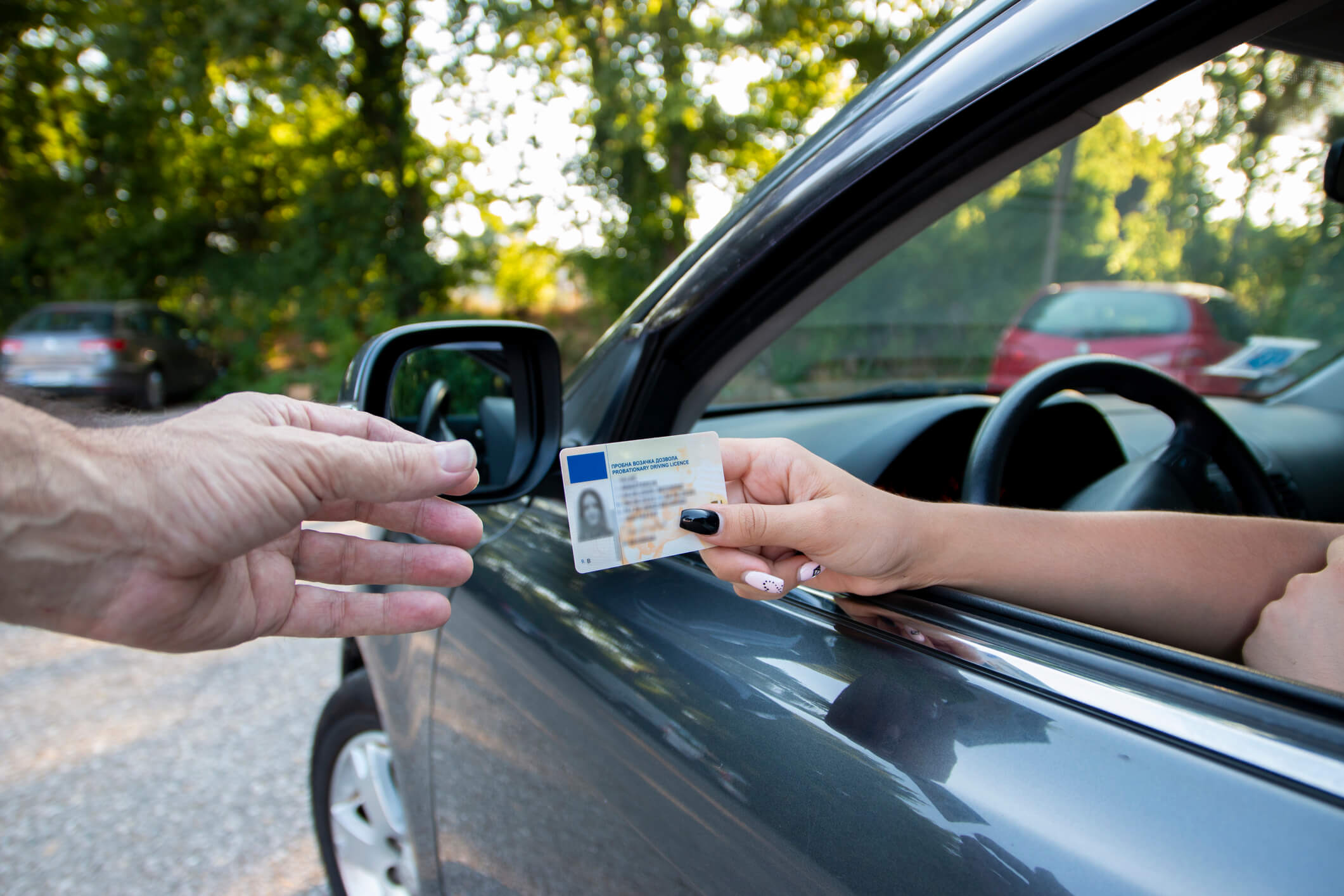
North Carolina charges this as driving while license revoked. Under G.S. 20-28(a) it is a Class 3 misdemeanor when the revocation was not an impaired driving revocation, and under G.S. 15A-1340.23(d) a person with no more than three prior convictions receives a fine only, capped at $200. If the revocation was an impaired driving revocation, G.S. 20-28(a1) makes it a Class 1 misdemeanor.
Hancock Law Firm, PLLC
601-A Cedar Street, Beaufort, NC 28516
Two versions of the same charge, and the difference decides everything
The citation usually reads the same either way, so people assume the exposure is the same. It is not. The only question that matters is why the license was revoked when the driving happened.
| Statute | When it applies | Class | Punishment |
|---|---|---|---|
| G.S. 20-28(a) | The revocation was for something other than impaired driving (points, failure to appear, failure to pay, lapsed insurance) | Class 3 misdemeanor | Fine only, up to $200, for a person with no more than three prior convictions (G.S. 15A-1340.23(d)). With enough prior convictions the fine-only rule no longer applies and active time becomes available, up to the 20-day maximum for a Class 3 misdemeanor. |
| G.S. 20-28(a1) | The revocation was an impaired driving revocation as defined in G.S. 20-28.2(a) | Class 1 misdemeanor | Fine amount in the court’s discretion. 1 to 45 days at the lowest prior level, up to 120 days at five or more priors. Conviction adds one year of revocation, two years for a second, permanent for a third. |
| G.S. 20-28(a3) | Driving after DMV sent notification under G.S. 20-48 on an impaired driving revocation, or failing to appear for two years from the date of the charge after being charged with an implied-consent offense | Class 1 misdemeanor | Same additional revocation ladder: one year, two years, then permanent. |
G.S. 20-28.2(a) is the switch. It lists the revocation statutes that count as impaired driving revocations, including G.S. 20-16.2 (refusal), G.S. 20-16.5 (the civil revocation entered after an implied-consent charge), and G.S. 20-17(a)(2). A revocation for accumulating points under G.S. 20-16(c), or one entered under G.S. 20-24.1 for a missed court date or unpaid costs, is not on that list.
The State has to prove the driver knew
The text of G.S. 20-28(a) says nothing about knowledge, but the courts read one in. State v. Atwood, 290 N.C. 266 (1976), requires actual or constructive knowledge that the license was revoked. DMV mailing notice under G.S. 20-48 raises only a rebuttable presumption, and that statute says notice by mail is complete four days after deposit.
That matters more often than people expect. A notice sent to an address from three moves ago, a revocation triggered by a court date the driver never learned about, or a G.S. 20-24.1 order that took effect on the sixtieth day after mailing are all things a defense attorney can put in front of the court. Joel Hancock can pull the certified driving record, find the revocation order, and check what DMV actually mailed and when.
“Upon the highways of the State” is an element too
G.S. 20-4.01(13) defines a highway as a way or place open to the public as a matter of right for vehicular traffic. Private property and some private lots do not meet that definition, and the State carries the burden on it.
G.S. 20-28(a2) can drop the punishment
This subsection is frequently misread as an extra charge. It is the opposite. A person convicted under (a) or (a1) is punished as if convicted of driving without a license under G.S. 20-35, a Class 3 misdemeanor, on showing either of two things: that the license was revoked solely under G.S. 20-16.5 and the driving happened more than 30 days after the order took effect (more than 45 days where the 45-day period applied), or that the person had already met the child support reinstatement requirements of G.S. 50-13.12 or G.S. 110-142.2. The reduction applies for insurance rating purposes as well, and the conviction report sent to DMV has to say so.
What a conviction costs beyond the courtroom
For most Class 3 cases the fine is the small part. The lasting problems are the permanent criminal record and the insurance consequence. The North Carolina Safe Driver Incentive Plan assigns 8 insurance points for driving during revocation or suspension, which corresponds to a 200 percent rate increase, and for convictions on or after July 1, 2025 carrying four or more points that surcharge runs five policy years rather than three.
Separately, G.S. 20-28.1 revokes the license for an additional year on conviction of any motor vehicle moving offense committed while already revoked. G.S. 20-28(c1) states that a violation of subsection (a) is not itself treated as a moving violation for that purpose. And a revocation described as permanent is not the end of the road: G.S. 20-28(c) allows an application for a license after 90 days on a one-year revocation under (a1), after one year on a one-year revocation under (a3) or a two-year revocation, and after three years on a permanent one.
How the case moves through Carteret County District Court
Carteret County has one courthouse and it is in Beaufort, on Broad Street, whether the stop happened in Morehead City, Newport, Atlantic Beach, or Cape Carteret. Driving while license revoked is charged in District Court, and a first setting is usually an administrative date where the case is called and continued rather than tried.
An attorney can appear on many of these settings without the client present, which keeps people from burning a work day on a five-minute calendar call. That also creates room to do the useful work before the case is called: getting the driving record, identifying which revocation was in force, and finding out whether the license can be reinstated at all. A reinstated license changes the conversation with the court more than anything said at the podium. If the underlying revocation traces back to a missed court date, see failure to appear; if it traces back to an impaired driving charge, see DWI defense. Related traffic matters are listed under traffic offenses.
What it costs
Hancock Law Firm quotes a flat fee up front, before anyone is hired, and payment plans are available in most cases. The court costs and any fine the judge orders are separate from the fee. More detail is on the page explaining what a defense costs. The first conversation is free.
Frequently asked questions
Is driving while license revoked a felony in North Carolina?
No. Under G.S. 20-28 it is a misdemeanor. It is a Class 3 misdemeanor under subsection (a), and a Class 1 misdemeanor under subsections (a1) and (a3) where the revocation was an impaired driving revocation as defined in G.S. 20-28.2(a).
Can I go to jail for driving while my license is revoked?
Not in the ordinary Class 3 case. G.S. 15A-1340.23(d) provides that the judgment for a Class 3 misdemeanor with no more than three prior convictions consists only of a fine, capped at $200. A Class 1 charge under subsection (a1) is not fine-only, but at Prior Conviction Level I the chart still authorizes community punishment only. Active time becomes a possibility once there are prior convictions.
What if DMV never sent me notice that my license was revoked?
Knowledge of the revocation is an element the State must prove. Mailing under G.S. 20-48 creates a presumption of notice, complete four days after deposit, but that presumption can be rebutted. Notice sent to an old address is a real issue worth raising in court.
Will a conviction extend how long my license stays revoked?
It can. Convictions under G.S. 20-28(a1) and (a3) add one year, then two years, then a permanent revocation. G.S. 20-28.1 adds a separate year for a moving offense committed while revoked. G.S. 20-28(c) sets when a person may apply again.
How much will my car insurance go up?
The Safe Driver Incentive Plan assigns 8 insurance points for driving during revocation, which corresponds to a 200 percent rate increase. For convictions on or after July 1, 2025 carrying four or more points, that surcharge applies for five policy years instead of three.
Talk to a Carteret County criminal defense attorney
If a citation for driving while license revoked is on the kitchen counter, the first useful step is finding out which revocation was in force and whether it can be cleared. Call Hancock Law Firm at 252-515-1516 or send a message below. Joel Hancock will get back to you.
This page provides general information about North Carolina law and is not legal advice. Reading it does not create an attorney-client relationship. Every case turns on its own facts, and the law can change.