

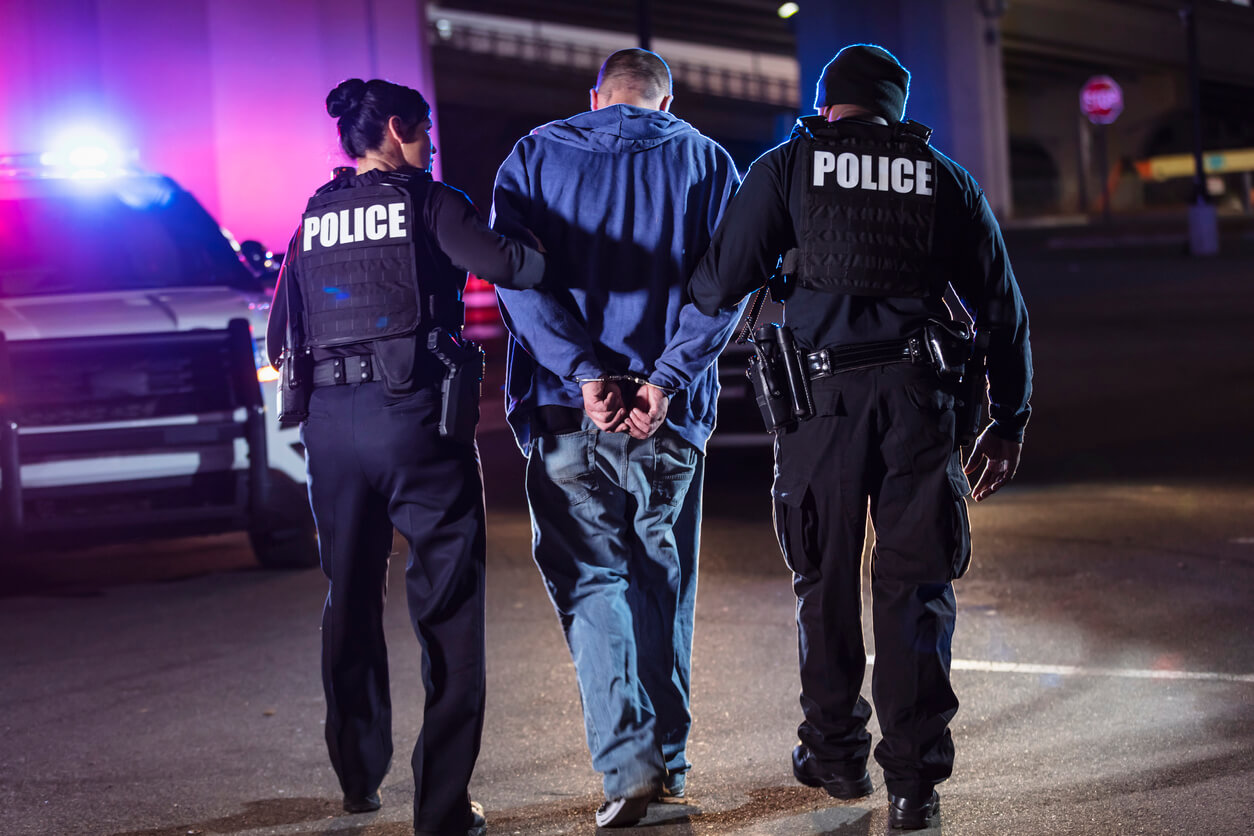
What is the Difference Between Being Arrested vs Detained?
In North Carolina, being detained means officers temporarily restrict your movement based on reasonable suspicion to investigate possible criminal activity. Being arrested is more serious. It means law enforcement has probable cause to believe you committed a crime, and you are formally taken into custody. Each situation carries different rules about searches, questioning, and Miranda warnings. A Carteret County criminal defense attorney at Hancock Law Firm can evaluate your encounter with police and protect your rights at every stage.
What Does It Mean to Be Detained in North Carolina?
Being detained means a law enforcement officer has temporarily restricted your freedom of movement to investigate suspected criminal activity. A detention occurs when a police officer has reasonable suspicion to believe that someone has committed or is about to commit a crime. It is short-term, lasting long enough for the officer to investigate and determine the next steps.
For an officer to detain someone, they must have reasonable suspicion, meaning they have a justifiable basis for stopping the individual. The reasonable suspicion standard is lower than the probable cause standard required for an arrest. For example, an officer in Carteret County might detain you during a traffic stop if they observe behavior suggesting impairment, or they might stop you on the street if you match a suspect description near a recent crime scene.
In North Carolina, the duration of detainment is limited by the Fourth Amendment, which protects against unreasonable searches and seizures. Being detained should be brief and only last as long as necessary for officers to confirm or rule out their suspicions. During a detention, you have the right to:
- Remain silent and decline to answer questions beyond basic identification
- Refuse consent to a search of your person or vehicle
- Ask whether you are free to leave
You are allowed to ask whether you are free to leave. If the officer says you are not, that is a sign you are being detained. Politely asking this question also creates a clear record of the encounter, which can matter if the legality of the stop is later challenged in court.
North Carolina does not enforce a general “stop and identify” law, meaning you typically are not required to provide identification simply because police ask you. This protection applies when you are walking, standing in public, or engaged in lawful activities that do not require identification.
While no statute requires ID from pedestrians, refusing to provide identity info during a valid investigative stop may lead to obstruction charges per case law. The major exception involves motor vehicle operation. Drivers must produce valid licenses when requested under North Carolina General Statute 20-29.
What Does It Mean to Be Arrested?
Being arrested is a much more serious situation than detention. An arrest occurs when law enforcement has probable cause to believe you have committed a crime, and it marks the beginning of formal legal proceedings against you.
Probable cause is a higher standard than reasonable suspicion. It means that the officer has concrete and objective facts they can point to to justify the arrest.
Under North Carolina law, upon making an arrest, a law-enforcement officer must identify himself as a law-enforcement officer unless his identity is otherwise apparent, inform the arrested person that he is under arrest, and as promptly as is reasonable, inform the arrested person of the cause of the arrest. After arrest, you will typically be handcuffed, transported to a police station or detention facility, and booked. The booking process includes recording your personal information, photographing you, and taking fingerprints.
If you are arrested in Carteret County, knowing what comes next can help you make better decisions. After booking, you will generally appear before a judicial official who determines whether to set bail or hold you in custody. The charges filed against you will determine whether your case proceeds as a misdemeanor or felony and which court handles it.
When Do Miranda Rights Apply?
One of the most misunderstood aspects of police encounters is when Miranda warnings are required. The difference between detention and arrest is crucial for determining when Miranda warnings are required. Many people do not realize that simply being detained does not automatically trigger Miranda rights.
Law enforcement is required to read you your Miranda rights only when both of the following conditions are met:
- You are in custody, meaning you are not free to leave, and
- You are being interrogated by the police about a crime.
During a detention, police do not need to read you your rights because they are not conducting a custodial interrogation. This means that if an officer pulls you over for a traffic stop in Beaufort and asks questions before placing you under arrest, those pre-arrest statements may still be admissible even without a Miranda warning.
If law enforcement fails to comply with Miranda when it is required, the remedy is not dismissal of charges. Instead, the issue becomes whether certain statements should be excluded from evidence. This is an important distinction. A Miranda violation does not automatically get your case thrown out, but it can weaken the prosecution’s evidence if statements were obtained improperly. Knowing what to say and what not to say during any encounter with police is one of the most effective ways to protect yourself.
Arrested vs Detained: Key Differences at a Glance
Understanding the side-by-side differences makes it easier to recognize your situation and respond appropriately:
- Legal standard. Detention requires reasonable suspicion, which is a lower bar. Arrest requires probable cause, meaning officers need concrete facts suggesting you committed a crime.
- Duration. Detention must be brief and limited to the time needed to investigate. Arrest leads to an extended period of custody, booking, and potential court proceedings.
- Physical restraint. During detention, officers generally do not handcuff or physically restrain you, but may do so briefly if reasonably necessary for safety. Arrest typically involves handcuffs, transport, and formal booking.
- Searches. During a detention, officers may only conduct a limited pat-down for weapons if they reasonably believe you are armed. After an arrest, officers can conduct a more thorough search incident to the arrest.
- Miranda warnings. Not required during a routine detention. Required before custodial interrogation following an arrest.
- Record. A detention alone does not appear on your criminal record. An arrest creates a formal record and initiates criminal proceedings.
Detention can escalate into an arrest if officers find evidence that supports probable cause. This is why staying calm, avoiding unnecessary statements, and knowing your rights during any police encounter is so important. If you believe a warrant may have been issued in connection with your case, acting quickly can make a significant difference in the outcome.
Protect Your Rights. Call Hancock.
Whether you were detained, arrested, or are unsure what happened during a recent police encounter in Carteret County, your next step matters. Joel Hancock has spent over 12 years defending clients in Beaufort, Morehead City, and Carteret County, and he personally reviews every case. Contact Hancock Law Firm today to schedule a free consultation and find out how to protect your rights and your future.